Guide
Es Vedrà: viewpoints, boat trips and the rules for seeing it properly
Es Vedrà in Ibiza: viewpoints at Cala d'Hort and Torre des Savinar, boat trips, sunset and nature reserve rules. Listings with prices.
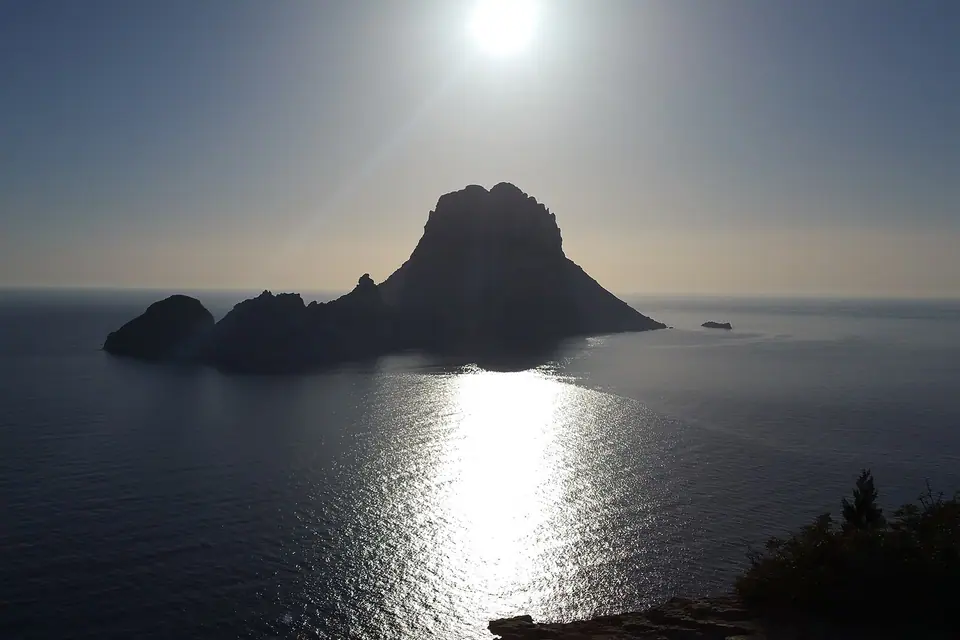
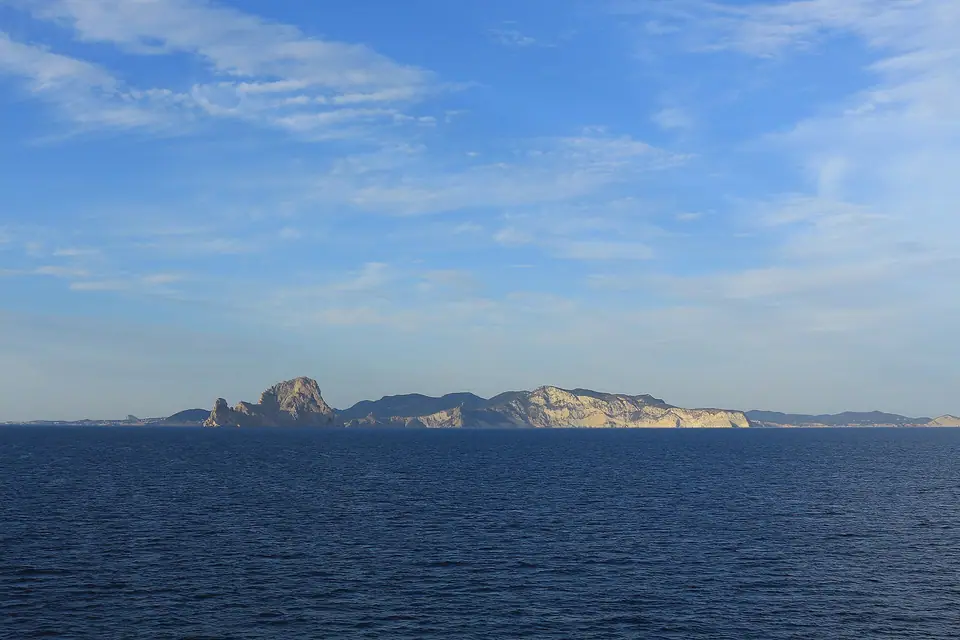
Es Vedrà is the rocky islet that rises off Ibiza's south-west coast and the most photographed silhouette on the island. You cannot step onto it, but there are many ways to look at it: from a viewpoint on land, on a coastal hike, from a kayak or from the deck of a catamaran at sunset.
This guide brings together what we could verify: what the islet is, where the viewpoints are and how to reach them, which excursions in our directory approach by boat and which rules protect the reserve. All practical details (prices, times) are indicative and should be confirmed with the operator.
What Es Vedrà is and why it is protected
Es Vedrà reaches 382 metres in height according to the sources we checked (including Lonely Planet and the Baleària blog), and beside it lies a smaller islet, Es Vedranell. For comparison, the island's highest point, sa Talaia de Sant Josep, is 475 metres. Both islets are part of the nature reserves of es Vedrà, es Vedranell and els Illots de Ponent, declared by Decree 24/2002 of the Balearic Government, which together cover nine islets.
The protection is there for its endemic plants, bird colonies, the lizards unique to each islet and especially sensitive seabeds. That is why a visit means looking at it, not setting foot on it.
Viewpoints: Cala d'Hort and Torre des Savinar
The two classic spots to see it without leaving dry land are Cala d'Hort beach, with a direct view of the islet and several restaurants on the shore, and Torre des Savinar, a defence tower from 1763 declared a site of cultural interest in 1949. To reach the tower you take the signposted turn one kilometre south-east of Cala d'Hort, park after about 500 metres of dirt track and walk 10 to 15 minutes. The cliff edge has no railing and the tower interior is not usually open. In August La Voz de Ibiza warns that the dirt car park at Cala d'Hort can fill up before midday.
Without a car, a beach guide points out that in summer you can link the L8 from Ibiza to Sant Josep with the L42B to Cala d'Hort; check the timetables. Close to the cove is Ses Païsses de Cala d'Hort, a Punic-Roman settlement with views of Es Vedrà and Torre des Savinar, which according to our listing opens Tuesday to Saturday in the warm months and closes from 20 December to 20 January. If you prefer a guided walk, there is a hike of about 3 hours to the viewpoints (Tuesdays at 9:00, from 24 March to 27 October 2026, 60 euros according to the listing) and a private route with meditation for groups of at least 5 people.
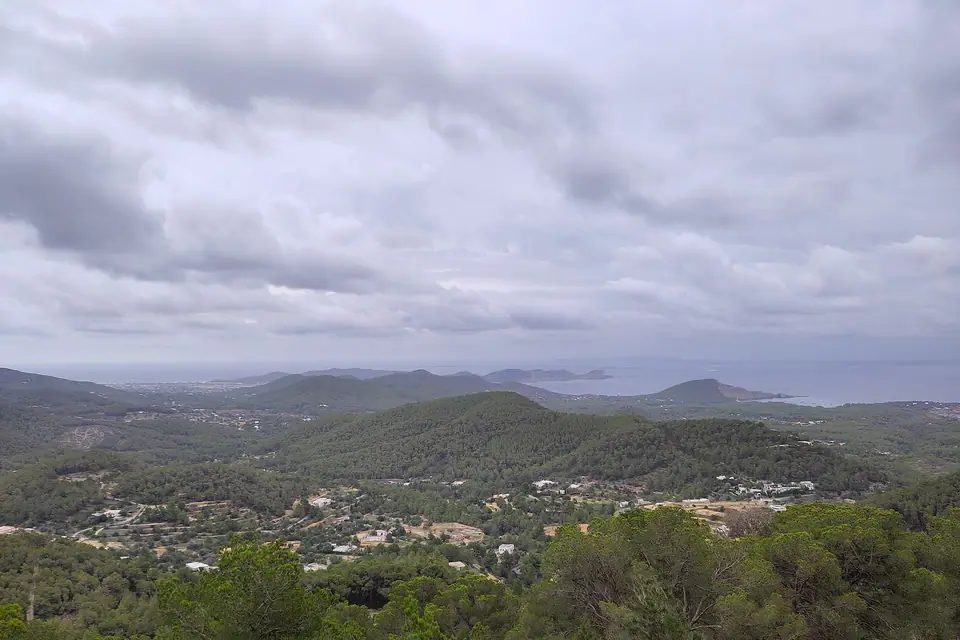
Es Vedrà viewpoints hike
Weekly guided outing of about 3 hours to the viewpoints over Es Vedrà, groups of 5 to 10.
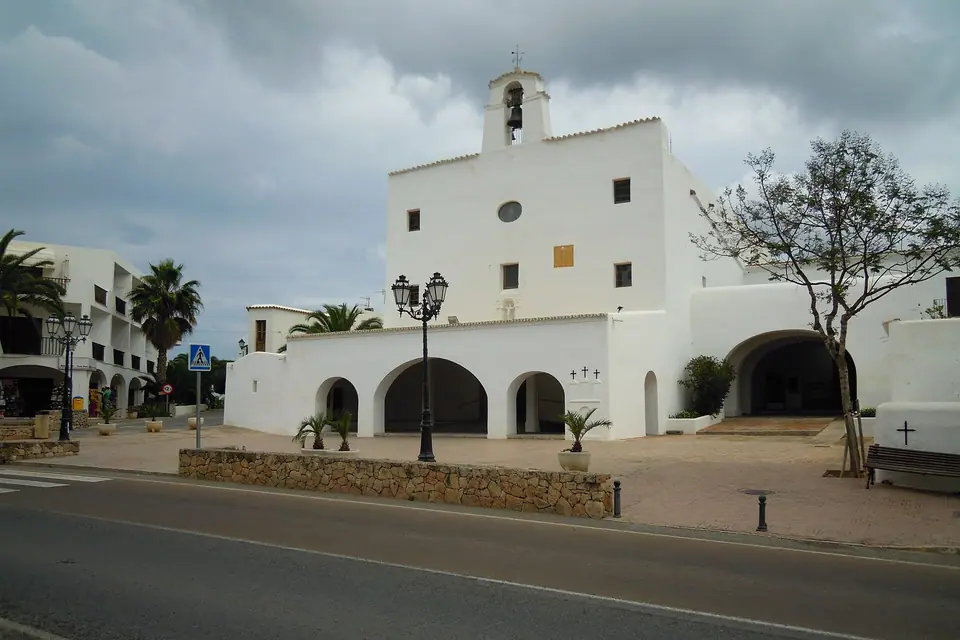
Private Es Vedrà hike with meditation
Private hike of about 3 hours on old trails to an Es Vedrà viewpoint. Minimum of 5 people.
Museu Etnogràfic d'Eivissa (Can Ros)
Ses Païsses de Cala d'Hort
Punic-Roman site with a necropolis and a farmhouse, an annex of the ethnographic museum, with views to Es Vedrà and Torre des Savinar.
Boat trips to Es Vedrà from Sant Antoni
The simplest option is a group catamaran from Sant Antoni harbour. According to our listings, the morning boat passes Cala Bassa, Cala Conta and Cala d'Hort, approaches Es Vedrà and Es Vedranell, may reach the old Atlantis quarry and makes a swim stop; finger food and drinks are served on board. It lasts about 4 hours and runs roughly from May to September. The sunset version follows the same route, leaving between 17:00 and 17:30 depending on the season. The operator's website lists 39 euros for adults and 20 for children; another reseller shows it from 17 euros, so confirm the price.
For a longer day, the Sant Antoni to Es Vedrà and Formentera listing lasts about 12 hours, includes paella and returns with the sunset (from 78 euros according to CheckYeti). If you travel as a group and want to set your own pace, there is skippered boat hire: up to 7 people for about 8 hours (from 450 euros for the boat, according to CheckYeti) or up to 12 people for 4 to 8 hours (between 370 and 430 euros for the boat). There is also a private sunset catamaran from Cala Jondal, with capacity for roughly 11 people and priced per vessel (from 800 euros according to CheckYeti, with another reseller showing 1,350).

Es Vedrà by catamaran with a swim stop (morning)
Four hours along the west coast to circle Es Vedrà and Es Vedranell, with a swim stop in a cove and finger food on board.
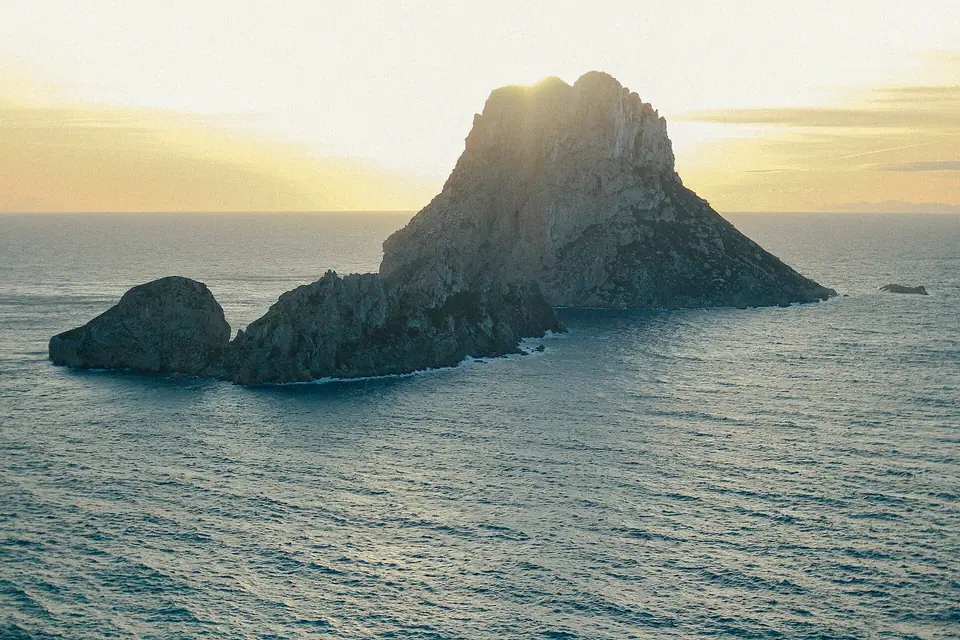
Es Vedrà at sunset by catamaran
Four-hour trip from Sant Antoni to see Es Vedrà in the late-afternoon light, with a swim stop and finger food on board.
Full-day trip to Es Vedrà and Formentera with paella and sunset (12 hours)
A day of about twelve hours from Sant Antoni past Es Vedrà and on to Formentera, with paella and a sunset return.
Closed on Saturdays and Sundays according to Google
Skippered boat hire for up to 7 people from Sant Antoni
A skippered boat from Sant Antoni for up to 7 people for about 8 hours, at your own pace along the west coast.
Closed on Saturdays and Sundays according to Google
Luxury skippered boat hire for up to 12 people from Sant Antoni
A larger skippered boat from Sant Antoni for up to 12 people, with outings of 4 to 8 hours.
Closed on Saturdays and Sundays according to Google
Private sunset catamaran to Atlantis and Es Vedrà from Cala Jondal
Private charter of around four hours from Cala Jondal towards Atlantis and Es Vedrà in the evening light, for small groups.
Atlantis, kayaking and diving: other ways to get close
Atlantis (Sa Pedrera de Cala d'Hort) is an old quarry facing Es Vedrà with natural pools in the rock. The guided hike in our listings lasts about 3 hours, with a steep descent and climb back, a swim stop and departures on Sundays from March to October 2026 (the start time runs from 7:30 to 9:00 depending on the month). It costs 60 euros per person according to Ibiza Spotlight.
A sunset kayak also leaves from Cala d'Hort towards Atlantis, with the islet in the background and a chance to swim and snorkel; it runs from March to October and the time shifts with sunset. For certified divers, a centre in Cala Tarida presents itself as a specialist in dives in the Es Vedrà reserves; the information we saw gives no depths or prices, so speak to them to find out which outings run.
Hike and swim to Atlantis (Sa Pedrera de Cala d'Hort)
Sunday morning outing to the old Cala d'Hort quarry, with a swim and views of Es Vedrà.
Sunset kayaking from Cala d'Hort to Atlantis with views of Es Vedrà
A sunset kayak route from Cala d'Hort to Atlantis, with swimming, snorkelling and views of Es Vedrà.
Dives in the Es Vedrà reserves and surroundings
Dives for certified divers in the Es Vedrà nature reserve and its surroundings, from Cala Tarida.
Rules: no landing and other restrictions
According to La Voz de Ibiza, which relies on Decree 24/2002 and later management plans, landing on the islets without authorisation from the Balearic Government's environmental authority is prohibited, and the ban applies all year, not only in nesting season. You can sail around them respecting safety distances and anchoring rules; anchoring on Posidonia meadows is not allowed. In the marine reserves there are restrictions on jet skis, flyboarding, water skiing and certain party boats, and shining floodlights on the islets from boats is not allowed beyond the required safety lights.
For wildlife, the same article recommends special care from March to August, when birds breed. Flying a drone in protected natural areas may require specific authorisation, so check beforehand. If you go to a viewpoint, stick to the paths and keep away from the edge. Note: we did not find a minimum distance in metres for boats; ask your operator how it is applied.
When to go and what to bring
For sunset, arrive early: at the viewpoints and at Cala d'Hort the car park fills up, and if you want to dine on the shore it is wise to book. Sunset time changes through the year, which is why the sunset departures in our listings adjust their schedule by season. Boat trips run mainly from May to September and kayaking from March to October.
Bring water, a hat, sun protection and closed shoes if you are walking. On a boat, a towel and something warm for the return at dusk. If the sea is rough, departures may change or be cancelled, so check each operator's policy before booking.
Frequently asked questions
Can you climb or land on Es Vedrà?
Not without authorisation from the Balearic Government's environmental authority. It is a nature reserve and the landing ban applies all year. What you can do is look at it from the viewpoints or sail around it following the rules.
What is the best viewpoint for Es Vedrà?
The most used are Cala d'Hort beach and Torre des Savinar, about 10 to 15 minutes' walk from where you leave the car. From the tower you see the islet, the coast and Cala d'Hort at once. Go early if you want to park.
Is the sunset boat trip worth it?
Our listings describe it as one of the most popular ways to see the islet in golden light, with a swim stop and snacks on board. It lasts about 4 hours and leaves between 17:00 and 17:30 depending on the season. Book ahead in summer and confirm the current price.
Is there anything to see on land besides the viewpoint?
Yes: Ses Païsses de Cala d'Hort, a Punic-Roman settlement with its necropolis, opens Tuesday to Saturday in the warm months according to our listing. There are also guided hikes to viewpoints and to Atlantis.
Can you go with children?
The group boat has a children's fare on the operator's website (20 euros according to our listing). The tower viewpoint needs care because the edge has no railing, and the hikes to Atlantis include a steep descent. Choose according to age.
More guides
- The best coves of Ibiza and Formentera: 14 to choose from depending on your plan
- Formentera day trip from Ibiza: ferry, boat, Ses Illetes and how to get around the island
- What to see in Ibiza: 15 must-sees, from Dalt Vila to Formentera
- Things to do in Ibiza when it rains
- Things to do in Ibiza with kids
- Free and cheap things to do in Ibiza
- Easy, low-effort things to do in Ibiza