Guide
Formentera day trip from Ibiza: ferry, boat, Ses Illetes and how to get around the island
How to get from Ibiza to Formentera: ferries to La Savina, boat trips, Ses Illetes, natural park rules and getting around. Facts and listings.
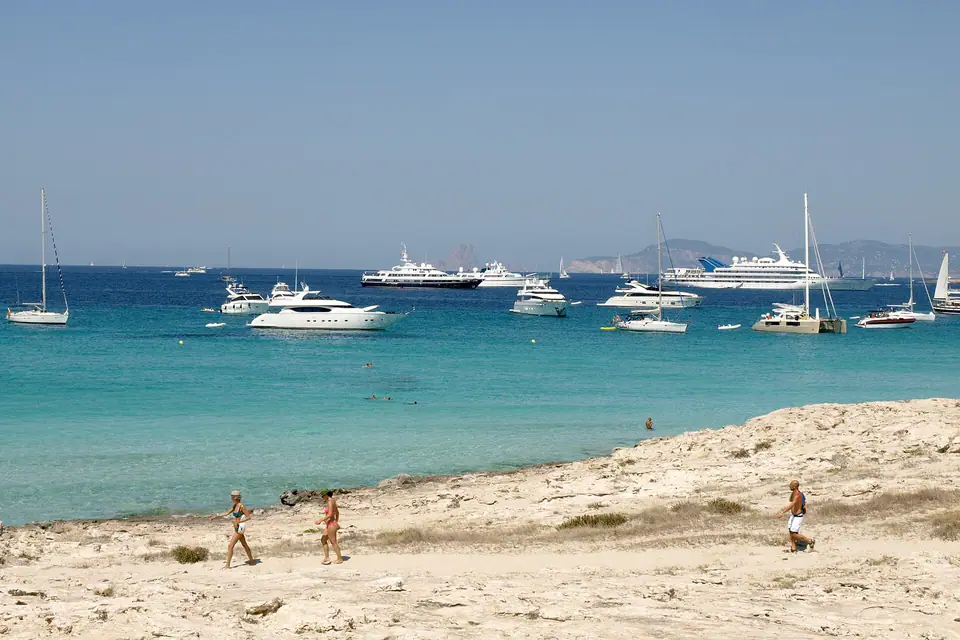
Formentera has no airport, so you cross by boat from Ibiza, and that crossing is the first chapter of the trip. Regular ferries drop you at La Savina, and boat or catamaran excursions add stops at Ses Illetes and s'Espalmador. You can do it in a day, but decide beforehand whether you want to go independently or with everything organised.
This guide covers the companies on the route, how long the crossing takes, what the listings in our directory offer, the natural park rules that affect the best-known beaches and how to get around the island without fuss. Timetables and fares change by season, so treat them as a guide and always check with the operator.
Ferry from Ibiza to Formentera: companies, port and crossing time
According to the ferry aggregators we checked (Ferryscanner and Ferryhopper), the route between Eivissa port and La Savina is served by Aquabus, Baleària, Formentera Lines and Trasmapi. La Savina is Formentera's port, on the north coast of the island. The fast boats take around 30 minutes; Aquabus, which according to our listing leaves from Platja d'en Bossa and Figueretas, takes close to an hour.
In high season there are departures roughly every 15 minutes. The aggregators put the first departure from Eivissa port at about 07:00 and the last between 22:00 and 23:00, and say the service runs all year with fewer sailings outside summer. For prices the sources give different figures, from about 20 to about 37 euros per one-way foot-passenger ticket depending on company and date. Always check the operator's own website, and book your return ticket with a margin in summer.
Aquabus passenger boat to Formentera from Playa d'en Bossa and Figueretas
Seasonal service of about 60 minutes to La Savina from Platja d'en Bossa and Figueretas, for a day on Formentera.
Round-trip ferry to Formentera from Figueretas
Round-trip crossing from Figueretas to Formentera to spend the day on the island on your own, about eight hours in total.
Round-trip ferry to Formentera from Platja d'en Bossa
The same Formentera crossing leaving from Platja d'en Bossa, designed for a car-free day on the island.
Ferry on your own or a boat excursion?
The ferry is the most flexible option: you reach La Savina, rent a bike or hop on a bus and plan the day at your own pace. A boat excursion works the other way round: the journey is part of the experience and the stops are already decided. For example, the catamaran from Figueretas in our listings leaves every day at 9:15, stops at s'Espalmador, leaves time at Ses Illetes and arrives at La Savina; according to its website it costs 70 euros for adults and 35 for children aged 3 to 12, with lunch and drinks. It runs roughly from May to October.
There are other formats. The Formentera Experience leaves from Es Canar, Santa Eulària or Cala Llonga in July, August and September, with a buffet lunch, snorkelling and about 3 hours of sailing (114 euros according to the operator). There is also a 4-hour group boat from Eivissa harbour carrying up to 60 passengers with paddle boards and snorkelling; an 8 to 9 hour catamaran with paella on board and a stop at Cala Saona; and private boats, priced per vessel (from about 702 euros for the Santa Eulària option and from about 1,200 for the 6-hour trip from Eivissa, according to CheckYeti). The amounts in each listing can change, so confirm them when booking.
Catamaran to Formentera from Figueretas with lunch and paddle boards
Daily 9:15 departure from Figueretas from 30 May to 4 October: a stop at s'Espalmador, time at Ses Illetes and arrival in La Savina, with lunch and drinks included.
According to Google, open only on Tuesdays and Saturdays
Formentera Experience: boat tour with lunch and snorkelling
Three hours sailing around Formentera with a guide, buffet-style lunch, drinks, snorkelling and free time afterwards on the island.
Group boat to s'Espalmador and Ses Illetes with snorkelling and paddle boards (4 hours)
Four hours on a shared boat (up to 60 passengers) from Ibiza Town harbour, with snorkelling, paddle boards, drinks and snacks.
Full-day catamaran to Cala Saona and Formentera with paella on board
An 8-9 hour day from Figueretas with a stop at Cala Saona, paella cooked on board, drinks and free time on Formentera.
Private boat trip from Santa Eulària to Ses Illetes and s'Espalmador
Private 8-10 hour day from Santa Eulària marina to Formentera, with snorkelling at Ses Illetes and s'Espalmador.
Private boat from Ibiza Town to Formentera with swims (6 hours)
Six hours on a boat for your group only, from Ibiza Town harbour to Formentera, with swim stops.
Ses Illetes and s'Espalmador: natural park rules
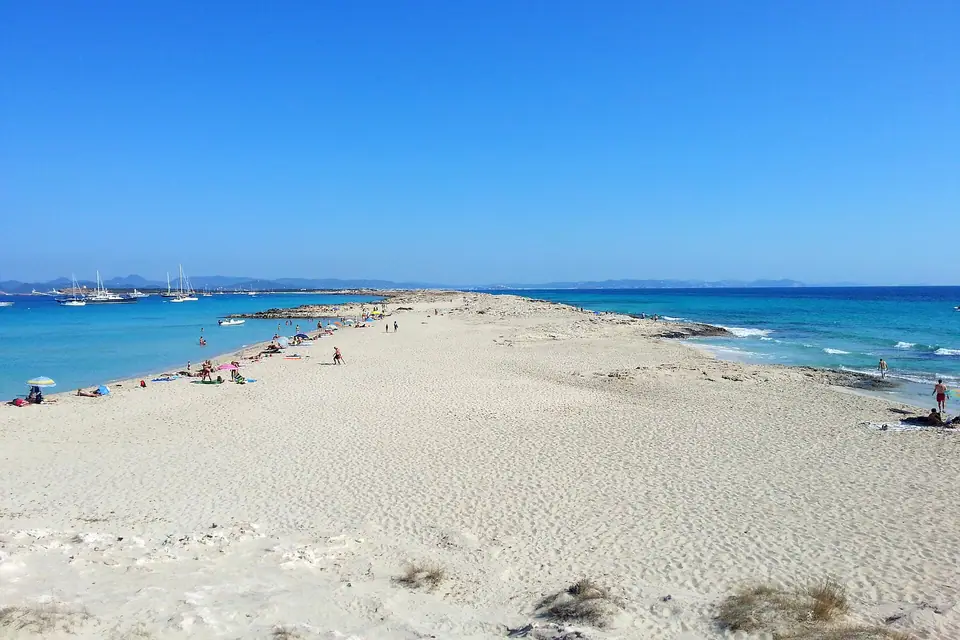
Ses Illetes lies at the northern tip of Formentera, on the es Trucadors peninsula, inside the Ses Salines d'Eivissa i Formentera Natural Park. The park covers southern Ibiza, northern Formentera and the channel between the two islands, and the Posidonia meadows around it have been part of a UNESCO World Heritage Site since 1999. That is why there are specific rules worth knowing before you go.
According to the Balearic Government's official page: on s'Espalmador you may only land through the entry and exit channels, and mud baths in its lagoon are banned. Anchoring is allowed only on sandy bottoms, never on Posidonia. Camping and overnighting in tents, caravans or motorhomes is not allowed, jet skis are banned and dogs may not enter outside urban areas. The park is open 24 hours a day, but dunes and salt flats are restricted areas, so stay on the marked paths. If you prefer to get in the water with a mask, one listing offers snorkelling from La Savina to Cala del Moro and s'Espalmador (from 28 euros according to CheckYeti).
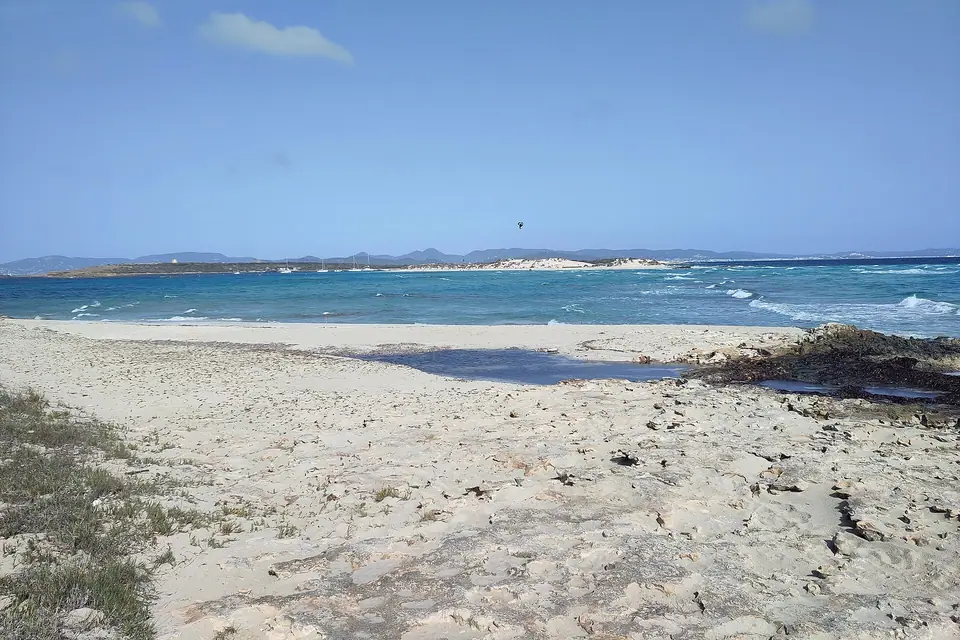
Snorkelling at Cala del Moro and s'Espalmador from Formentera
A boat outing from La Savina for snorkelling at Cala del Moro and the island of s'Espalmador, reachable only by sea.
Getting around Formentera: bikes, buses and vehicle limits
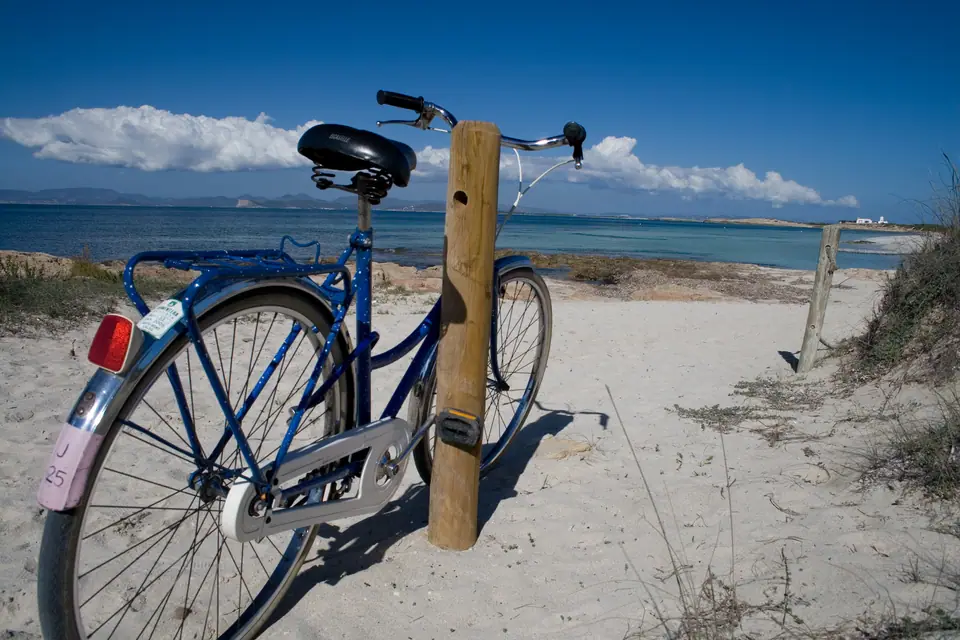
Formentera is about 19 kilometres long and almost flat, so a bike or e-bike is the natural choice; there are rental shops near the port at La Savina, and the island has 32 green routes for walking or cycling. If you would rather not pedal, public transport leaves from La Savina: line L1 goes to Es Pujols and L2 to La Mola. Extra services are added in summer, and in winter the Consell cuts lines and frequencies, so check the current timetable before planning your return.
If you are thinking of taking your own car or motorbike on the ferry, note that between 1 June and 30 September driving a vehicle on Formentera requires prior authorisation under the island's sustainability law (Law 7/2019); it is processed at formentera.eco, and the 2027 rules have not been published yet. To reach Caló des Mort and es Ram, the Consell restricted road access and parking in 2026 between 15 May and 15 October: you can only stop briefly to drop off or pick up passengers, and parking is in designated areas such as es Copinar. On a day trip without your own vehicle this does not affect you, but it is one more reason to cycle or take the bus.
Ibiza Outdoors (Walking Ibiza)
Formentera by electric mountain bike
Guided day on e-MTBs along Formentera tracks and paths past windmills, salt flats and towers, ferry ticket included.
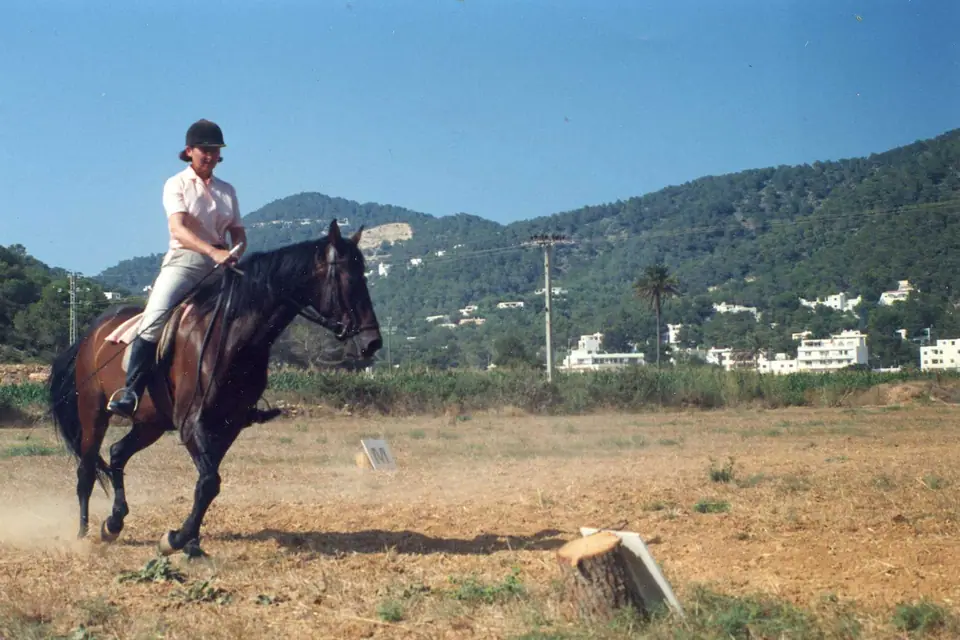
Horse rides across Formentera
Guided rides for all levels from Es Pujols, including along the beach.
What to see besides the beaches
If you have spare time, the natural park has four signposted walking routes on Formentera, including Can Marroig - Torre de la Gavina and the sa Guía - es Trucadors path, and an interpretation centre at Can Marroig with exhibitions and audiovisual displays. It is a good alternative to the beach when the sun gets strong. The park also hosts around 210 bird species, and flamingos can be seen almost all year, with the best chances at the end of summer and in autumn.
In Sant Francesc Xavier there is a free ethnographic collection according to the Consell, with tools, furniture and clothing from traditional life. At the eastern tip stands the La Mola lighthouse, although our listing warns that visiting hours and access are not confirmed for 2026, so call before going up. According to a ferry guide, the La Mola hippie market takes place on Wednesdays and Sundays.
What to bring and when to go
Bring water, something to eat, a towel, sun cream and comfortable footwear; a ferry guide reminds visitors to come well supplied to Ses Illetes. A snorkel mask and water shoes will help on the rocky coves. If you are cycling, add a cap and an extra bottle. Keep your return ticket on your phone and do not leave the last sailing to chance.
The ferry runs all year, but the boat excursions in our listings are concentrated from May to October (the Formentera Experience only from July to September). The vehicle limit runs from 1 June to 30 September. To avoid crowds, go in the early hours or pick a weekday. In strong wind or bad weather, departures may change or be cancelled, so check each operator's policy.
Frequently asked questions
How long does it take to get from Ibiza to Formentera?
The fast ferries take about 30 minutes between Eivissa port and La Savina. The Aquabus service from Platja d'en Bossa and Figueretas, according to our listing, takes close to an hour. Exact times depend on the operator and the season.
Can you visit Formentera and return on the same day?
Yes. There are departures from early in the morning and, according to the aggregators, the last return from La Savina leaves in the late afternoon or evening in summer. The round-trip ferry listings assume about eight hours in total. Confirm the last departure on the day you travel.
Do I need a car on Formentera?
It is not essential. The island is small and flat, there are buses from La Savina and bike and scooter rental. If you bring your own vehicle, between 1 June and 30 September you need a circulation authorisation through formentera.eco.
Can you land on s'Espalmador and take mud baths?
You may land only through the entry and exit channels, and mud baths in the lagoon are banned under the natural park rules. Anchoring on Posidonia and camping are also not allowed.
Which is better, the ferry or a catamaran?
It depends on what you want. The ferry is cheaper and more flexible if you want to move around on your own; the catamaran or group boat includes stops at Ses Illetes and s'Espalmador and, in several listings, food and drinks. Compare duration, what each listing includes and the current price before deciding.
More guides
- Ibiza sunsets: viewpoints, coves and experiences to watch the sun go down
- Wineries and wine of Ibiza and Formentera: visits with tastings, local wine and hierbas ibicencas
- The best coves of Ibiza and Formentera: 14 to choose from depending on your plan
- Es Vedrà: viewpoints, boat trips and the rules for seeing it properly
- Formentera by bike or e-bike: green routes, rental, guided tours and tips
- Ibiza in winter: what is open, what to do and what the weather is like from November to March
- Ibiza markets: Las Dalias, Punta Arabí, Sant Joan and the Sant Jordi flea market
- What to see in Ibiza: 15 must-sees, from Dalt Vila to Formentera
- Things to do in Ibiza when it rains
- Things to do in Ibiza with kids
- Free and cheap things to do in Ibiza
- Easy, low-effort things to do in Ibiza